
- Blog
- How Modular Buildings Support Manufacturing Automation
How Modular Buildings Support Manufacturing Automation
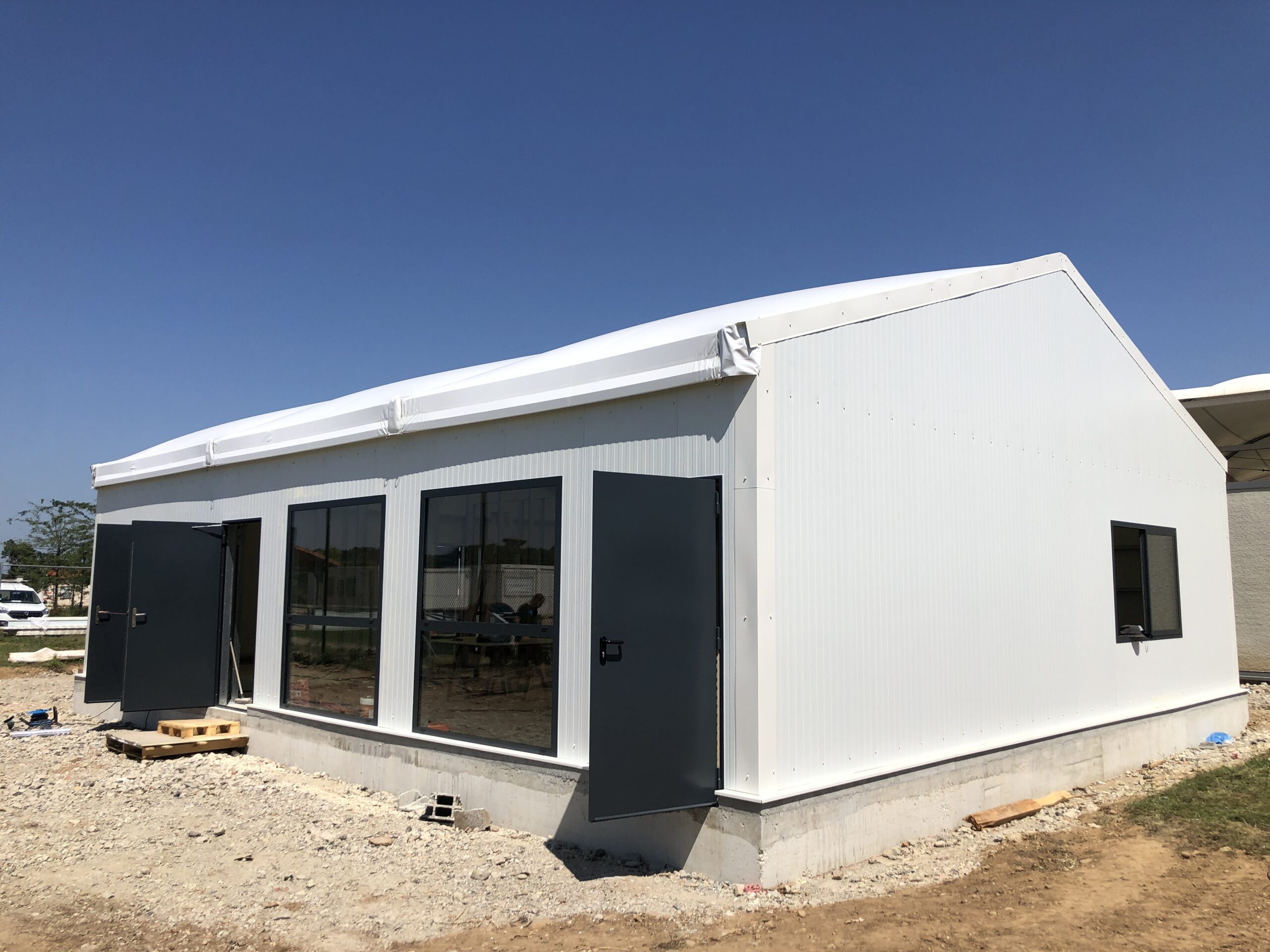
As manufacturing businesses adopt robotics, AI-driven production lines, and automated workflows, the need for adaptable, future-proof facilities is increasing. Traditional buildings often lack the flexibility to integrate new technology without costly alterations or operational disruption. Modular buildings offer a practical alternative – providing manufacturers with the space, infrastructure, and agility needed to implement automation efficiently and without long construction delays.
Common Challenges Slowing Automation
- Insufficient space to introduce robotics or new production cells
- Inflexible building layouts that restrict conveyor or machinery reconfiguration
- Long construction timelines that delay automation rollouts and ROI
- Environmental constraints that affect the performance of sensitive equipment
With growing pressure to modernise, manufacturers need a faster, more adaptable facility solution. This is where modular buildings offer a strategic advantage. They provide flexible, scalable, and rapidly deployed environments that support automation without the cost and downtime of traditional construction.
This article explores how modular buildings support manufacturing automation and why more businesses are choosing semi-permanent facilities to modernise their operations.
Built for Flexibility in Evolving Production Lines
Automation is rarely static. As product lines evolve and technologies advance, layouts must be reconfigured to accommodate new systems, conveyors, and robotics. Modular buildings provide a flexible environment that can be expanded, redesigned, or relocated to suit changing needs.
Key benefits include:
- Reconfigurable layouts for machinery, robotics cells, and assembly lines.
- Scalable floor space that can be increased as automation grows.
- Minimal disruption during expansion or structural changes.
This flexibility enables manufacturers to trial new automation technologies, increase production capacity seasonally, or create dedicated areas for testing and R&D without long-term building constraints.
Fast Deployment for Time-Sensitive Upgrades
Automation projects often come with tight implementation timelines. Waiting 12–24 months for a traditional building can stall progress and delay return on investment.
Modular buildings can be designed, delivered, and installed in a matter of weeks.
- Manufacturers can launch robotic systems on schedule
- Add new production lines quickly
- Respond rapidly to increased output requirements
For businesses needing temporary or semi-permanent space to support automation upgrades, modular structures offer a fast and secure way to maintain productivity while long-term facility plans develop.
Optimised Support for Robotics and AI-Driven Systems
Automation equipment requires specific environmental and structural conditions to operate efficiently. Modular buildings can be engineered with tailored features to meet these exact requirements:
Environmental Control
Maintaining stable temperature, dust control, and humidity levels is essential for robotics, sensors, and automated quality-control tools. Insulated modular buildings with HVAC options help protect sensitive equipment and reduce downtime.
Load-Bearing Strength and Layout
Automated production lines often involve heavy machinery, gantries, or conveyor systems. Modular structures can be designed with the appropriate floor loading and open spans to support equipment without internal columns obstructing the workflow.
Connectivity and Power Infrastructure
Automation depends on reliable connectivity and power supply. Modular buildings support integrated data cabling and network routing, smart factory technology, including IoT sensors, and energy-efficient lighting and electrics designed around machine placement.
This creates an environment ready for Industry 4.0 systems from day one.
Enhancing Lean Manufacturing and Efficiency
Automation aims to eliminate inefficiencies – and the building itself should reinforce that goal. By allowing manufacturers to place modular facilities directly adjacent to existing production areas, semi-permanent buildings reduce the movement of goods, improve flow, and cut wasted time.
Examples of efficiency-boosting uses include:
- Automated goods-in or goods-out loading bays
- Robotics-ready packing or dispatch areas
- On-site quality testing or calibration labs
By positioning these functions closer to the main production line, manufacturers reduce logistical friction and support lean processes.
Supporting Workforce and Training Needs
Automation introduces new skill requirements within the workforce. Modular buildings provide an ideal setting for a number of environments.
- Technical training centres for robotics or equipment handling
- Dedicated engineering or maintenance workshops
- Office space for automation project teams
These facilities can be delivered as insulated, comfortable environments that support employee well-being while aligning with operational goals.
A Cost-Effective Way to Modernise Manufacturing
Compared to traditional builds, modular structures offer significant cost advantages, both upfront and over time. They allow manufacturers to implement automation gradually and avoid the financial risk of large-scale permanent construction. There are a number of cost-related benefits.
- Lower initial investment than conventional construction
- Reduced operational downtime during installation or expansion
- Rental options for short- or medium-term automation projects
For businesses testing or scaling robotics, this cost efficiency provides a safer path to innovation.
Why Manufacturers Choose Lauralu
Lauralu designs and delivers customised modular buildings across the UK and Ireland that meet the demands of modern manufacturing and Industry 4.0 environments.
Manufacturers choose Lauralu because our buildings are:
- Fully adaptable – easy to expand, reconfigure, or relocate as automation evolves
- Fast to install – enabling quicker digital transformation
- Engineered for reliability – with structural strength, insulation, and environmental control options suitable for advanced equipment
Whether you require a temporary production extension, robotic packing area, controlled environment for precision systems, or an R&D innovation space, Lauralu provides practical, future-ready solutions tailored to your automation strategy.
Your building, your way.
Upgrade Your Facilities to Support Automation
If you are implementing or scaling automation within your manufacturing operations, the right building solution will help you do it efficiently and without costly delays.
Speak to Lauralu today to discuss a modular building designed around your automation needs.
Like what you see?
Let’s build something together
Get in touch
Contact us at Lauralu for more information or advice regarding temporary buildings.
We can provide you with a free fast estimate or advice on temporary buildings.